 Ford introduced EcoBoost technology in 2009 and has continued refining it ever since. What began with a twin-turbocharged 3.5L V6 soon expanded into Ford trucks, smaller four-cylinder and three-cylinder engines, and performance applications such as the Mustang EcoBoost and F-150 Raptor.
Today, EcoBoost refers to a family of gasoline engines that combine turbocharging, direct fuel injection, and variable camshaft timing. Together, those technologies help Ford produce strong horsepower and torque from relatively compact engines across trucks, SUVs, and performance vehicles.
For shoppers, the important part isn’t memorizing how each component works. It’s understanding what EcoBoost can mean behind the wheel: responsive acceleration, useful low-end torque, capable towing in the right vehicle, and fuel economy that can make sense for everyday driving.
How Does Ford EcoBoost Work?
Three main technologies work together inside an EcoBoost engine.
Turbocharging: A turbocharger uses energy from the engine’s exhaust to pressurize incoming air. That helps the engine produce more power when you need it, whether you’re merging onto the freeway, passing at highway speed, climbing a grade, or pulling a trailer.
Direct fuel injection: Fuel is delivered precisely into the combustion chamber. This helps the engine manage fuel efficiently while still producing the power the driver is asking for.
Variable camshaft timing: The engine continuously adjusts the timing of its intake and exhaust valves based on driving conditions. It can respond one way when you’re accelerating and another when you’re cruising steadily down the highway.
In practical terms, EcoBoost lets Ford get substantial performance from engines that don’t need huge displacement to get the job done.
What Are the Benefits of an EcoBoost Engine?
Depending on the Ford and engine you choose, EcoBoost can provide several advantages that matter in everyday driving:
• Strong low-end torque for getting moving, passing, towing, and climbing grades
• Responsive acceleration when traffic opens up or you need to merge
• Impressive output from compact engines, giving shoppers another alternative to larger-displacement engines
• Useful fuel economy in applications designed for commuting and everyday driving
• Broad versatility across compact pickups, SUVs, full-size trucks, and performance cars
• Different levels of capability, from an efficient daily driver to an EcoBoost-powered truck built to tow
That range is a big part of the appeal. EcoBoost isn’t one engine with one purpose. Ford uses the technology differently depending on what each vehicle is designed to do.
EcoBoost Performance and Fuel Economy Examples
The 2026 Ford Bronco Sport shows how much the character of an EcoBoost engine can change within the same vehicle. Its 1.5L EcoBoost produces 180 horsepower and 200 lb.-ft of torque, while the 2.0L EcoBoost in the Badlands produces 250 horsepower and 280 lb.-ft. A Bronco Sport Big Bend with the 1.5L EcoBoost is EPA-estimated at 25 MPG city, 30 MPG highway, and 27 MPG combined.
For shoppers who like the flexibility of a small pickup, the available 2.0L EcoBoost in the 2026 Ford Maverick produces 250 horsepower and 280 lb.-ft of torque while reaching an EPA-estimated 27 MPG highway.
At the sportier end of the lineup, the 2026 Ford Mustang EcoBoost uses a 2.3L turbocharged engine producing 315 horsepower and 350 lb.-ft of torque. Ford lists the EcoBoost Fastback at an EPA-estimated 22 MPG city and 33 MPG highway.
EcoBoost also scales into serious truck capability. The 2026 Ford Ranger offers up to 7,500 pounds of available towing capacity when properly equipped with the available Trailer Tow Package.
Which 2026-or-Newer Ford Models Offer EcoBoost Engines?
Engine availability can depend on trim, drivetrain, configuration, and model year.
| Ford Model | EcoBoost Engine Option(s) |
| Bronco Sport | 1.5L EcoBoost, 2.0L EcoBoost |
| Bronco | 2.3L EcoBoost I-4, 2.7L EcoBoost V6, 3.0L EcoBoost V6 |
| Explorer | 2.3L EcoBoost I-4, 3.0L EcoBoost V6 |
| Expedition | 3.5L EcoBoost V6 |
| Maverick | Available 2.0L EcoBoost |
| Ranger | 2.3L EcoBoost, 2.7L EcoBoost V6, 3.0L EcoBoost V6 |
| F-150 | 2.7L EcoBoost V6, 3.5L EcoBoost V6, High-Output 3.5L EcoBoost V6 |
| Mustang | 2.3L EcoBoost |
The range in that table is worth noticing. The same basic EcoBoost philosophy can serve a Bronco Sport meant for daily driving, a three-row Explorer, an F-150 built for truck duty, or a Mustang designed to be fun on an open stretch of road.
Which EcoBoost-Powered Ford Fits the Way You Drive?
Choosing between EcoBoost-powered Ford vehicles gets easier when you start with what you’ll actually ask the vehicle to do.
| If You Prioritize... | Ford Models to Consider |
| Daily commuting and maneuverability | Bronco Sport, Maverick, Mustang EcoBoost |
| Compact pickup versatility | Maverick |
| Off-road driving and outdoor recreation | Bronco, Bronco Sport |
| Three-row family space | Explorer |
| Full-size SUV space and towing | Expedition |
| Midsize pickup capability | Ranger |
| Towing and full-size truck versatility | F-150 |
| Sporty performance | Mustang EcoBoost |
EcoBoost for Driving Around Grapevine and North Texas
Grapevine puts drivers right in the middle of a wide range of North Texas driving. Grapevine Ford itself sits on State Highway 114, just minutes from DFW International Airport, so freeway driving is part of everyday life for many local owners.
If your weekday means navigating SH 114, SH 121, or the broader Dallas-Fort Worth freeway network, a Bronco Sport or Maverick can give you manageable dimensions for traffic and parking while still providing turbocharged power when you need to merge or move around slower traffic.
For families regularly crossing the Metroplex, heading to the airport, or packing up for longer highway trips, the Explorer brings three-row seating together with available EcoBoost performance. The 2026 Explorer seats six or seven depending on configuration, making it a more natural match when passenger space matters as much as acceleration.
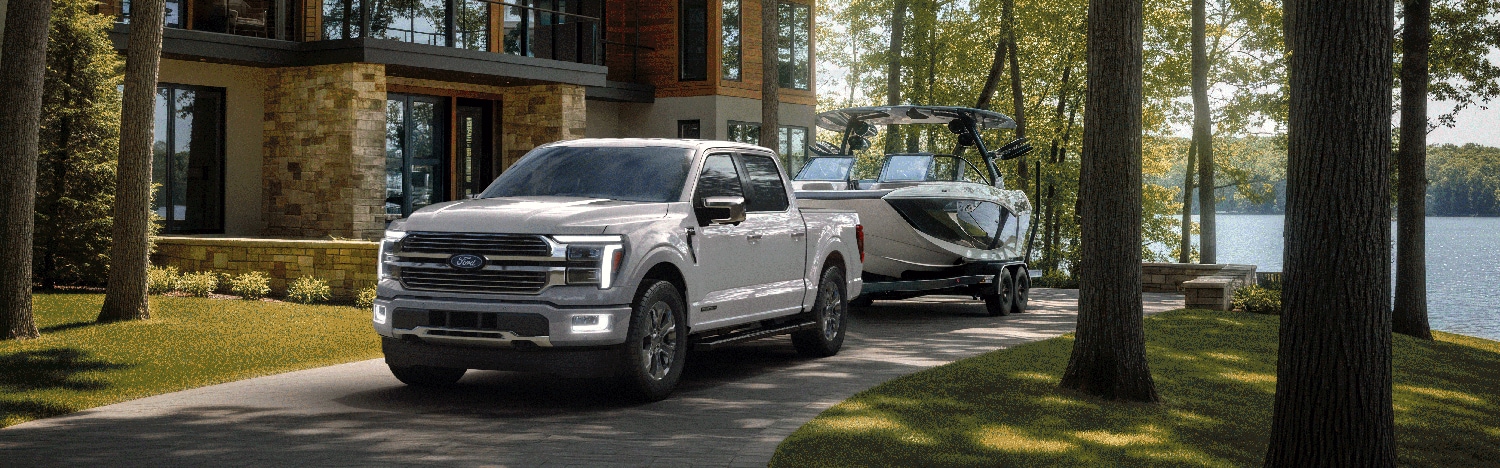
North Texas drivers who tow boats, utility trailers, campers, or recreational equipment have several EcoBoost options. A Ranger gives you midsize-truck dimensions and up to 7,500 pounds of available towing when properly equipped, while the F-150 gives shoppers a much broader range of full-size truck configurations and EcoBoost choices.
And if your driving is less about cargo and more about enjoying the road, the Mustang EcoBoost’s 315 horsepower gives you plenty to work with without requiring a V8 under the hood.
That variety matters in an area where one vehicle may spend Monday in Metroplex traffic, Friday on a long freeway drive, and Saturday pulling a trailer or heading out of town.
Does an EcoBoost Engine Need Premium Gas?
Not every EcoBoost engine requires premium fuel for normal driving, and the recommendation varies by vehicle and engine.
For example, Ford lists 87 octane as the minimum for the 2026 Bronco’s 2.3L and 2.7L EcoBoost engines while recommending 91 octane or higher. The Bronco Raptor’s 3.0L EcoBoost calls for 91-octane-or-higher fuel. Ford also notes that some published horsepower and torque ratings are based on premium fuel.
For any specific Ford, the Owner’s Manual and Ford’s fuel recommendation for that particular engine are the best guides. If maximum performance matters to you, it’s also worth checking what fuel was used to achieve the advertised output.
Explore EcoBoost-Powered Ford Vehicles at Grapevine Ford
From an easy-to-drive Bronco Sport and versatile Maverick to an EcoBoost-powered Mustang, Explorer, Ranger, Expedition, or F-150, Ford gives shoppers plenty of ways to match turbocharged performance to the way they actually drive.
You can browse Grapevine Ford’s current new inventory online or visit us at 801 E. State Hwy 114, Grapevine, TX 76051. Our team can help you compare models, trims, EcoBoost engines, towing capability, fuel economy, and features to narrow down the Ford that makes the most sense for you.
Categories:
EcoBoost